You could pay very different amounts of tax if you make the same amount of money in two different provinces in Canada. People often say that Canada’s tax system is fair and progressive, but they don’t realise how much the final bill changes because of provincial tax rates, brackets, credits, and surtaxes.
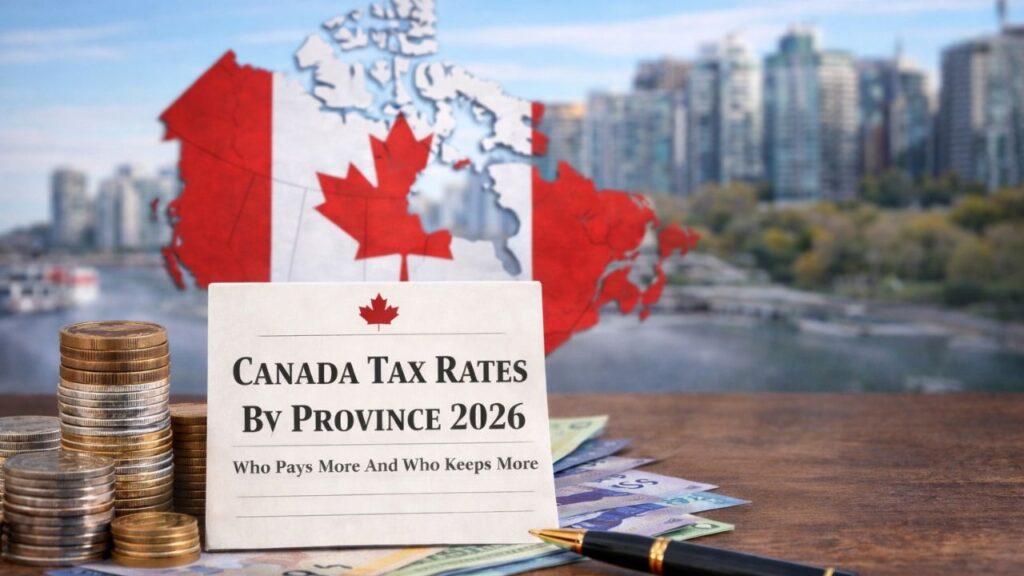
That’s why someone making $100,000 in one province can take home thousands more than someone making the same amount in another province. As the cost of living rises and government payments and tax credits make up a big part of household budgets, it’s more important than ever to know where taxes are the highest and lowest.
This article explains how Canada’s federal and provincial tax systems work, why there are such big differences between provinces, which provinces have the highest and lowest tax burdens, and what this means for workers, retirees, and business owners.

How Canada’s Tax System Really Works
There are two levels of income tax in Canada. Everyone who pays taxes pays both federal and provincial or territorial income tax. The federal part is the same no matter where you live, but the provincial part is very different.
The federal government decides what the tax brackets and rates are for the whole country. On top of that, provinces add their own brackets, rates, surtaxes, and credits. This layered system is what makes the total amount of taxes people owe vary so much from one part of the country to the next.
Along with income tax, provinces may also collect health premiums, payroll premiums, or surtaxes that change the amount people pay.
The Common Base for Federal Income Tax
Federal tax rates are the same in all of Canada and are the basis for everyone’s tax bill. Taxes on income go up as your income goes up.
The federal structure is the same everywhere, but the effect is stronger or weaker depending on where you live because provinces add their own rates on top of it.
This means that Canadians’ take-home pay is very different across the country because of provincial tax policy, not just federal tax.
Why taxes are different in each province
Provincial governments pay for healthcare, education, infrastructure, social services, and a number of income support programs. Each province decides how much money it needs and how much it depends on income taxes compared to other sources like sales taxes, resource royalties, or corporate taxes.
Some provinces don’t charge a lot of income tax but do charge a lot of sales tax or fees. Some people pay higher income taxes to pay for bigger government programs or lower fees for other services.
The structure of the economy also matters. Some provinces can afford to lower income taxes because they have a lot of money from natural resources. Others, like those with older populations or higher healthcare costs, may rely more on personal income tax.
The provinces with the highest taxes on personal income
Quebec: The Highest Overall Tax Burden
Quebec always has the highest personal income taxes of any province. It has the highest top marginal tax rate in Canada, and it reaches that rate at a lower income level than most other provinces.
People in Quebec also pay into separate provincial programs, like the Quebec Pension Plan, which takes money out of their pay cheques. Quebec has great public services and family benefits, but the downside is that middle- and high-income earners take home less money.
Quebec often has the highest tax bill in the country for professionals, couples with two incomes, and retirees with taxable pensions.
Nova Scotia: High Taxes on Average Incomes
New residents of Nova Scotia are often surprised by how quickly higher tax rates kick in. In a lot of other provinces, middle-income earners reach high marginal rates much later.
The province does offer some targeted credits, but because of the way the tax system is set up, many workers and retirees pay more tax than the national average, even if their incomes are considered low elsewhere.
New Brunswick and Prince Edward Island
Compared to their average incomes, the provincial tax rates in both Prince Edward Island and New Brunswick are relatively high. Recent changes have made it easier for people with low incomes, but people with middle- and high incomes still have to pay high marginal rates.
These provinces get a lot of money from income taxes to pay for public services, which is why their rates are higher.
Moderate Tax Levels in Provinces
Ontario: Not the best, but still expensive
When you look at tax rates, Ontario is usually in the middle. However, its surtax system can make the effective tax rate much higher for people who make a lot of money.
The tax brackets in Ontario look reasonable on paper, but when you add in surtaxes, the amount of tax you owe can go up quickly. This makes Ontario more expensive for business owners, professionals, and retirees who have a lot of taxable income.
Credits and benefits help low- and moderate-income families, but higher-income families still feel the pinch.
Manitoba
People say that Manitoba’s tax policy is steady but not very interesting. The rates are not the highest or the lowest, but the province does charge relatively high taxes on people with middle incomes.
Manitoba still relies more on income tax than some western provinces, even though the brackets have changed recently.
The provinces with the lowest personal income taxes
Alberta: The Long-time Leader in Low Taxes
Alberta has always had the lowest income taxes in Canada, mostly because of money from resources. Alberta is still one of the best provinces for workers and retirees when it comes to taxes, even though its tax system has changed recently.
For most of the income range, the province has a flat provincial tax rate, which means that a lot of people pay a lot less tax than they would in Ontario or Quebec.
Alberta often has the highest take-home pay in the country for people who make a lot of money, own a business, or are incorporated professionals.
British Columbia: Low for Most, High for the Best
People with low and middle incomes in British Columbia pay relatively low taxes. But for people with high incomes, its top marginal tax rates go up a lot.
This means that people who make less money will pay less in taxes, but people who make more money may pay amounts that are closer to what they would pay in provinces with higher taxes.
Saskatchewan
Saskatchewan has a tax system that is competitive because it has moderate rates and fewer extra taxes. It isn’t the lowest, but it is always one of the provinces with the best tax rates for middle-class families.
The Territories: A Different View
The territories often have lower income tax rates to make up for the higher cost of living and the problems that come with living in a certain area. Residents may be able to take advantage of territorial tax credits and deductions that are meant to reflect what life is really like in the north.
But the tax savings may not be enough to make up for the higher costs of housing, food, and utilities.
How Taxes Affect Older People and Retirees
Differences in provincial taxes can have a big effect on retirement income for seniors. You have to pay taxes on your pension income, RRSP withdrawals, and investment income. How much of that income you keep depends on where you live.
Some provinces give seniors tax breaks on their pension income or based on their age, while others rely more on income tax, no matter how old you are.
Because of this, many retirees think about moving after they retire, especially if they have a fixed income.
What This Means for Families and Workers
For Canadians who work, differences in provincial taxes have an effect on:
- Monthly pay after taxes
- Being able to get income-tested credits
- Deductions from pay cheques
- The ability to save for a long time
Two families with the same income can end up in very different financial situations depending on where they live. These differences can add up to tens or even hundreds of thousands of dollars over the course of a career.
Government payments, taxes, and credits
When taxes go up, the government often gives out more money, rebates, and social programs. Higher tax rates in some provinces may mean bigger child benefits, help with housing, or health care coverage.
Provinces with lower taxes may not depend as much on payments based on income and more on people taking responsibility for themselves. Neither approach is inherently superior; however, comprehending the trade-off is crucial when assessing overall financial well-being.
Tax is only one thing to think about when choosing where to live.
Taxes are important, but they are not the whole story. Housing costs, job prospects, access to healthcare, and overall quality of life are all important factors to think about when choosing where to live.
A province with low income tax but high housing costs may still leave people worse off financially than a province with high taxes but cheap housing and good public services.